Every facility manager I know has a binder full of safety programs that never quite make it to the shop floor. Indoor air often ends up in that binder. You cannot see most air contaminants, so the issue tends to wait until someone complains, an HVAC coil freezes, or a safety officer closes a loop after a near miss. Commercial duct cleaning is one of those unglamorous controls that, done correctly, makes a lot of other boxes easier to check. It will not replace good ventilation design, nor will it cure bad housekeeping, but it supports a surprising number of OSHA and EPA expectations and smooths audits far more often than people expect.
I have walked more roofs than I care to admit, looking into returns and seeing a felt blanket of dust inside the duct liner. I have also seen the opposite scenario: ducts gleaming after a night shift of proper source removal, air handlers balanced within a hair of design, and complaints that used to fill a work order queue suddenly stop. The compliance wins in those moments are not an accident. They are baked into how OSHA thinks about occupational exposure and how the EPA frames indoor environmental quality.
What OSHA actually expects, and where ducts fit
OSHA does not publish a single indoor air quality standard for all workplaces. Instead, it uses a patchwork of enforceable rules plus the General Duty Clause. If employees are exposed to recognized hazards that are likely to cause serious harm and there is a feasible means of abatement, OSHA can act. Dust accumulation that raises respirable particulate, moldy materials releasing bioaerosols, or contaminated duct liners that shed fiberglass can all become a recognized hazard once documented.
Several specific standards intersect with HVAC systems and make commercial duct cleaning a practical control:
- Ventilation and air contaminants. OSHA’s ventilation requirements and permissible exposure limits focus on keeping contaminant concentrations below limits. When supply and return ducts are clogged with construction dust or textile lint, the measured air changes and capture efficiency drop. I have watched a facility miss its target airflow by 20 to 30 percent due to matted return trunks. After cleaning, their manometer readings snapped back to spec, and a welding area that had pushed fumes into adjacent corridors settled within acceptable short-term exposure targets. Housekeeping and combustible dust. In manufacturing and some food facilities, combustible dust is a headline risk. You can vacuum floors all day and still leave pounds of fine powder tucked inside ductwork. That powder becomes both a fuel source and a distribution path. Cleaning ducts reduces the hidden layer that a small ignition could otherwise launch through the system. Facilities that report duct dust loads in the kilogram range after a first-time cleaning usually see their insurance carriers breathe a little easier. Confined spaces and safe access. Technicians who enter large ducts to remove contamination often trigger the permit-required confined space rule. A credible duct cleaning scope builds safe entry into the plan: isolation of fans, verification of air quality, rescue arrangements, and control of introduced chemicals. This is not just for show. I have seen a crew ignore lockout on a return fan and get a scare when the building automation rebooted. A written procedure and a lock fixed that forever. Hazard communication. If you apply any biocide or coating inside an air system, it becomes an OSHA Hazard Communication issue. Labels, Safety Data Sheets, training, and exposure controls are nonnegotiable. A mature contractor treats the HVAC system as a workplace, not a void, and aligns their ChemGuard binder and training accordingly. Respiratory protection and particulates. High-efficiency particulate removal in ducts releases settled dust. Crews need respirators, fit tests, and filters appropriate to the hazard. Supervisors also need to anticipate impact on adjacent occupied areas. Temporary filtration and negative pressure booths at access panels avoid the “snow globe” effect in offices two floors below.
Duct cleaning on its own is not an OSHA requirement. It functions as a reasonable means of abatement when you can link the condition of the ducts to exposure, airflow, or a recognized ignition source. That link is easier to prove than you might think, especially when you measure.
EPA guidance, and the myth of “always clean the ducts”
EPA’s indoor air guidance takes a careful line: do not clean ducts simply because they exist, clean them when there is evidence of contamination. The agency has emphasized for years that routine air duct cleaning is not a panacea. On the other hand, EPA publications are explicit about cleaning in specific scenarios: visible mold growth on hard duct surfaces, ducts contaminated with vermin or their droppings, and ducts clogged with excessive dust and debris that restrict airflow or release particles indoors.
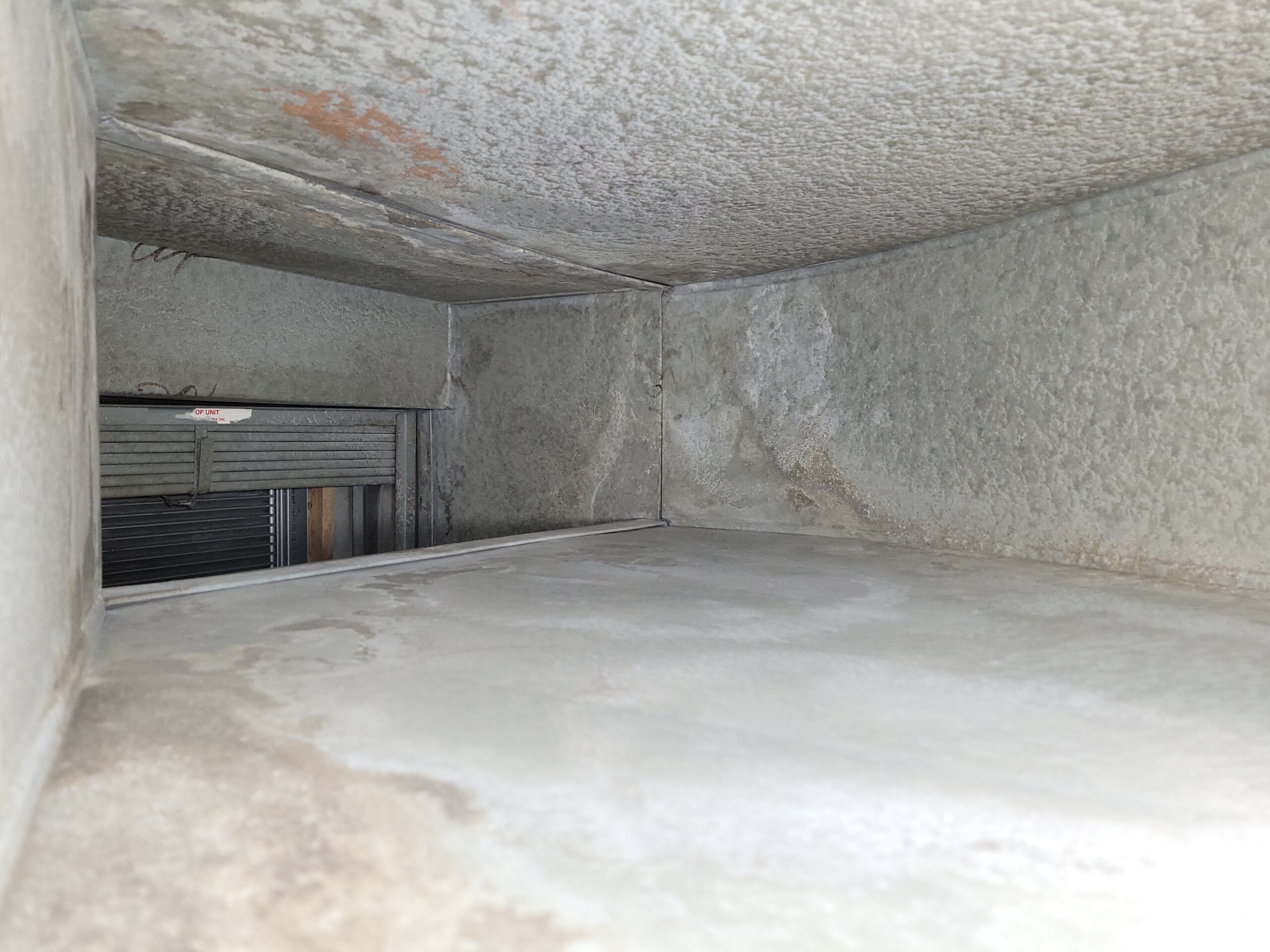
There is a reason for that nuance. HVAC systems move and sometimes generate moisture. If coils are wet, if drain pans hold water, or if duct liners absorb condensate, you create conditions where microbial growth can take off. EPA’s guidance on mold in commercial buildings does not mince words about wet porous materials. If you can clean and dry them, do it. If you cannot, remove and replace them. Insulated ducts that have turned into sponges do not get better with wishful thinking.
EPA also regulates antimicrobial products. Any biocide marketed for use inside HVAC systems must carry an EPA registration. That label dictates where and how it can be applied. When a contractor fogs a chemical in your supply trunks without checking the label, they hand you a compliance problem. I have rejected proposals that treated every surface as fair game for a “sealant” simply because the brochure promised fresh-mountain-air vibes. If the product is not registered for that use, it does not go in the duct. Period.
Certain renovation and abatement rules can intersect with ducts, too. If existing insulation or mastic contains asbestos, the National Emission Standards for Hazardous Air Pollutants set strict work practices during renovation. Ducts routed through older mechanical rooms can surprise you with legacy materials. Testing before cutting access openings costs far less than a stop-work notice.
A last EPA angle shows up through energy and performance programs. While not enforcement, programs that track energy intensity often note that fouled ductwork raises fan horsepower and degrades heat exchange. Cleaning is not an energy retrofit, but it helps you collect valid data on actual system performance, which in turn supports better commissioning, demand control ventilation, and filter change schedules.

Where the rubber meets the roster: worker complaints and IAQ investigations
Walk into any facility where employees report headaches in one wing or who file rash complaints after a room reconfiguration, and you will find a dance between HR, safety, and facilities. The OSHA Technical Manual lays out a very pragmatic approach to indoor air quality investigations: talk to people, look for obvious sources, measure where it counts, and control the culprit. Duct systems show up repeatedly, not because they are always to blame, but because they deliver whatever is in the mechanical soup.
I once traced a chemical odor complaint to a small, overlooked return plenum drawing from a maintenance cage where solvents were stored open. The duct was spotless. The air was not. Another time, the complaint was legit: the supply trunks near a print room had a paste of paper dust and fuser toner clinging to the liner. Every start-up puffed a little gray gift onto desks. We captured samples using tape lifts, scoped interior surfaces, and wrote a corrective plan that combined source removal, filter upgrades, and a relocation of paper cutting to a room with its own exhaust. OSHA did not issue a citation, but the complaint evaporated and the safety committee finally took HVAC photos off their agenda.
The lesson is not that every complaint equals dirty ducts. The lesson is that ducts are both a mirror and a highway. If you are closing out IAQ cases and your visual inspections end at the diffuser, you are leaving evidence behind.
How duct cleaning supports compliance without overpromising
Facilities get into trouble when they treat duct cleaning as magic. Good practice positions it as a supportive control that enables and verifies:
- Airflow that matches design intent. When you measure total external static pressure before and after cleaning, the difference can be large enough to bring air changes back into range, especially in long trunk runs with multiple turns. That alone reduces the chance of exceeding exposure limits for airborne particulates generated within the space. Removal of reservoirs. OSHA cares about exposures during work hours. EPA cares about sources that degrade indoor environments. Dust and microbial reservoirs inside ducts feed both. Physical source removal, not just spraying a fragrance, reduces the mass available to be transported. Reliable filtration. Filters do the heavy lifting, but only when air actually flows through them. Bypass from bad gasketing or clogged returns lets particulates dodge filtration. Cleaning and sealing restore actual, not theoretical, filtration efficiency. Credible documentation. HVAC hygiene is far easier to defend with photos, particle counts, and post-clean verification than with “we think it is fine.” When an auditor asks “how do you know,” you can point to static pressure logs, coil differential pressure trends, and borescope images instead of shrugging.
The cleaning method matters more than the sales pitch
The method has to match the contamination and the duct construction. Supply ducts with lined interiors, typical in offices, need a gentler touch than bare-metal industrial trunks. The industry’s backbone is source removal using vacuum collection with agitation tools sized to the duct. If a contractor cannot articulate how they will maintain negative pressure at the access point and capture loosened debris at the tool head, they are winging it.
Wet application inside ducts is a last resort. If hard surfaces have visible mold, you can physically remove, HEPA vacuum, and, if the product label allows, apply a disinfectant. If the surface is porous and colonized, replacement is the honest path. Coatings have a place, mostly to encapsulate surfaces after removal when a repair would be disruptive, but only with products registered for HVAC use and with a life safety conversation about smoke toxicity. A shiny white interior looks clean; it can also hide water that never should have been there.
I have had great luck requiring contractors to work Visit this link to a recognized standard and to specify their capture tools, agitation methods, and access plan in writing. The North American industry standard for HVAC cleaning provides a solid benchmark even if you are not in that market. It is not a regulation, but auditors and insurers recognize it, and it integrates comfortably with OSHA’s expectations around safe work.
A short compliance checklist you can steal
- Verify the need. Document visible contamination, airflow restriction, or a linkage to exposure before you schedule cleaning. Screen materials. Test suspect mastics or insulation for asbestos and confirm any chemicals used are EPA registered for HVAC use. Control the work zone. Lock out fans, protect occupied areas with temporary filtration, and plan confined space entry where ducts are large. Capture and contain. Maintain negative pressure, use HEPA vacuums, and avoid methods that aerosolize dust into occupied spaces. Prove the result. Record static pressure, airflow, and visual verification. Keep before and after images, plus waste disposal receipts.
Two real projects, two different outcomes
At a food packaging plant, we discovered half a centimeter of starch dust coating the return trunks over production. The plant had invested in new dust collectors, but air returns still acted like a giant Hoover. Static pressure on the return side measured at negative 1.8 inches of water column, well beyond design, and the maintenance team fought near-constant coil icing on humid days. We scheduled duct cleaning over a weekend shutdown, isolated the area, and coordinated with their combustible dust plan. The crew removed close to 80 kilograms of dust across several hundred feet of ducting. Post-clean, return static dropped into the design corridor, icing stopped, and the plant’s insurer accepted the updated combustible dust program without asking for explosion venting on the air handler. OSHA never visited, but if they had, the evidence would have been our ally.
At a corporate office with persistent odor complaints, leadership pushed for duct cleaning immediately. A walkthrough found pristine supply trunks but a neglected drain pan with biofilm and a sewer vent tied into a return plenum through a leaky chase. Cleaning ducts would have polished a symptom while the causes festered. We instead cleaned the pan, fixed the plumbing, rebalanced dampers, and upgraded filters to a higher MERV that the fan could handle. No duct cleaning necessary. Compliance stayed tidy because we followed the evidence, which is exactly what OSHA’s investigation playbook encourages.
Documentation that stands up when the clipboard appears
Compliance lives and dies by records. Duct cleaning that helps you pass an audit does three things on paper:
- It shows why you did the work, not just that you did it. Tie the scope to observed conditions, measured airflow issues, or IAQ complaints. It proves controls during the work, including lockout tags, confined space permits if applicable, chemical labels, and negative pressure logs. It verifies outcomes with both visuals and numbers. I like a one-page summary that includes static pressure before and after at standard test ports, a few representative airflow readings at diffusers, and dates for filter changes and coil cleaning surrounding the work.
Waste handling is easy to forget. If you capture debris and dispose of it, keep the manifest. If you had to strip duct liner and it tested positive for asbestos, your abatement paperwork is now part of your HVAC hygiene file. Auditors pull on loose threads. Give them a finished seam.
Frequency is strategy, not superstition
“How often should we clean the ducts?” comes up in every kickoff. The honest answer is: it depends on use, filtration, and housekeeping. High-shed processes like woodwork, textiles, and bulk powders load ducts quickly. Medical offices with decent filtration and good housekeeping can go years without meaningful accumulation. I ask for inspection schedules, not arbitrary cleanings. Borescopes make this easy. Set an inspection cadence by risk area, review filter differential pressure trends, and let evidence dictate when to act. If you always end up cleaning on a fixed interval, your filters are probably undersized or your housekeeping upstream is slipping.
Energy data is a powerful ally here. If fan speed or static pressure drifts upward over months, airflow resistance is climbing. It might be filters, coils, or returns. Cleaning creates a baseline. From there, trends point to the next intervention far better than guesswork.
The cost conversation you should have with finance
Duct cleaning is not cheap. For a mid-size office building, you might see quotes in the low tens of thousands depending on access. In industrial settings with night work and safety overhead, the number rises. Here is how I frame the return:
- Downtime avoidance. Go look at the work orders tied to hot-cold calls, coil icing, motor trips, and IAQ grievances. If airflow restriction is the silent partner, solving it frees real hours. Risk reduction. Combustible dust and mold incidents cost orders of magnitude more than cleaning. Underwriters notice proactive hygiene in their scoring models, even if they do not tell you outright. Energy stabilization. Cleaning will not cut your bill in half, but reattaining design static pressure prevents the slow creep that forces a VFD to spin harder. One client saw a 6 to 8 percent reduction in fan energy after a deep clean and seal of return leaks. Plausible, measurable, worth writing down. Better data. Once the system is clean, any new drift in pressure or airflow points to filters or upstream process changes. That clarity saves money on the next fix.
Finance teams warm to costs that turn into controls, not cosmetics. Bring them measurements, not adjectives.
The credible way to select a contractor
You can spot a strong vendor by how they talk about containment, access, and verification. If the sales pitch leans on sandalwood-scented myths rather than air balance and negative pressure, thank them for their time. Ask for a job plan that includes access locations, fan isolation steps, chemical labels if any, and a verification protocol that you understand. If your building has tenants, ask how they will maintain normal operations without filling offices with fine powder. The good ones have a playbook with zipper walls and after-hours sequences that keep complaints to zero.
I also require coordination with the balancing technician. Cleaning without rebalancing after significant resistance changes is like changing tires and not checking alignment. A short return visit to set dampers and verify total flow closes the loop.
A frank word on edge cases and judgment calls
Some ducts should not be cleaned. Old fiberboard ducts that crumble at a stern look will not survive aggressive agitation. Severely colonized duct liner may shed fibers no matter how carefully you vacuum. In these cases, you are looking at replacement, at least in sections. It is a hard sell, but it is also honest, and it aligns with EPA’s guidance on porous materials with mold.
Likewise, spraying deodorizers to “fix” a building that smells like a maintenance closet only trains noses. The odor returns and your employees lose trust. Use cleaning to restore mechanical hygiene, not to mask a symptom. If the root cause is chemical storage, a leaky trap, or design airflow that never met code, address that first. Duct work is a supporting actor, not the star, and it prefers that role.
A stripped down protocol that respects both OSHA and EPA
- Assess and isolate. Inspect with scopes, measure static, identify moisture, and isolate fans with lockout. Protect adjacent areas. Capture while agitating. Set up negative air machines with HEPA filtration. Use brushing or air whips suited to the duct material. Handle specials with care. Clean coils and drain pans, correct slopes, and replace any water-damaged liner rather than coating it. Apply chemicals only by label. If a disinfectant or coating is warranted, confirm EPA registration for HVAC use and follow exposure controls. Verify and document. Re-measure static, collect post-clean photos, schedule filter changes, and rebalance as needed.
Why this topic matters more than the dust you can see
Indoor air problems rarely make headlines, but they shape productivity, complaints, and regulatory risk every day. Commercial duct cleaning will not fix a flawed building. It will make a decent one perform like it should and give you evidence to defend your choices. It also shows inspectors that you take sources and pathways seriously. That is the heart of both OSHA’s and EPA’s positions: identify hazards, control them at the source, and verify your results.
I still carry a small borescope in the truck. When a safety manager insists the problem is “not the ducts,” I look anyway. Sometimes they are right. Often they are close but not quite. The camera finds a spillover gap at a return box, a lint mat above a busy corridor, or a wet seam an inch from a fiber liner seam. Those are the moments when a pragmatic duct cleaning plan slips perfectly into a compliance story that would otherwise take months to write.
Advanced Environmental Services Inc.
341 Stanley St, Winnipeg, MB R3A 1S7
+12042846390